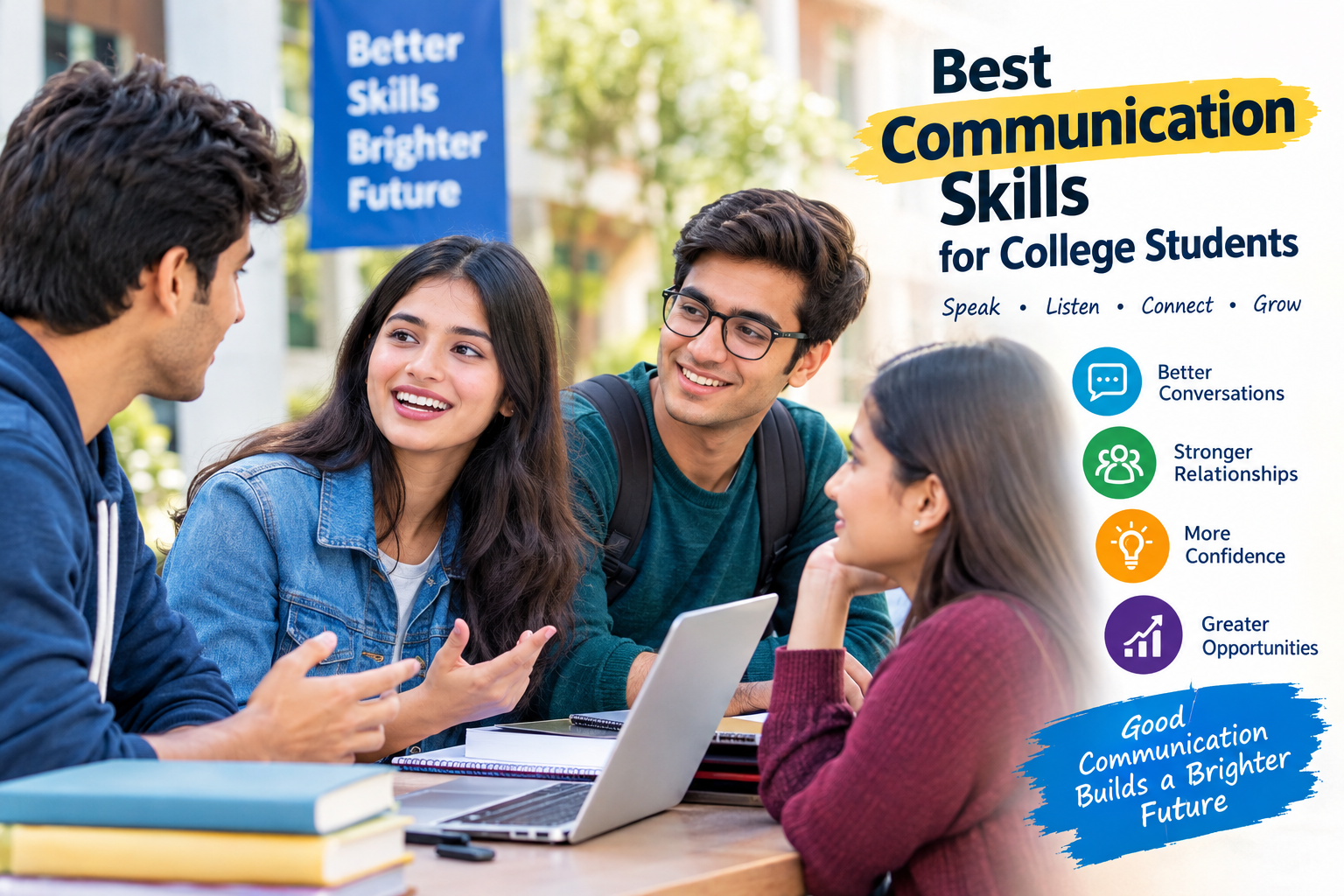
College life is an important stage of learning, personal development, and career preparation. Students attend lectures, participate in group projects, give presentations, meet new people, and prepare for future jobs. In all these situations, communication skills play a major role. Having good grades is important, but the ability to express ideas clearly, listen to others, and work with different people can make the college experience much better.
In my opinion, communication skills for college students are among the most valuable skills to develop during student life. Good communication helps students share their thoughts confidently, build positive relationships, solve problems, and prepare for professional opportunities. These skills are not limited to speaking English fluently. They also include listening carefully, writing clearly, understanding body language, and showing respect for different opinions.
The good news is that anyone can improve communication skills with regular practice. Students do not need expensive courses or special equipment to begin. They can start by making small changes in their daily conversations, classroom activities, and study routines.
In this article, I will discuss the best communication skills for college students and explain how students can develop them step by step.
Why Communication Skills Are Important for College Students
Communication is a part of almost every college activity. Students need to ask teachers questions, explain their ideas during discussions, communicate with classmates, and complete assignments with group members.
When students communicate effectively, they can understand lessons more clearly and avoid unnecessary misunderstandings. They may also find it easier to make friends, seek academic guidance, and express concerns when they need help.
Strong communication skills are also useful when applying for internships, scholarships, part time jobs, and future employment. Employers often value people who can explain information, listen to feedback, collaborate with colleagues, and handle professional conversations.
From my point of view, students should treat communication as a practical life skill rather than something they only need for examinations. The earlier they start practising, the more naturally these skills can develop.
1. Improve Verbal Communication Skills

Verbal communication means sharing information through spoken words. It is one of the most important communication skills for college students because students use it during classroom discussions, presentations, interviews, and everyday conversations.
To improve verbal communication, students should focus on speaking clearly, choosing suitable words, and organizing their thoughts before speaking. There is no need to use complicated vocabulary to sound intelligent. Simple and meaningful sentences are often more effective.
For example, when answering a question in class, explain the main point first and then provide a reason or example. This approach helps teachers and classmates understand your answer.
Students who feel nervous while speaking can practise with friends or family members. They can also read short passages aloud, describe their daily activities in English, or record themselves speaking for a few minutes.
Regular practice builds confidence over time. Making mistakes is a normal part of learning, so students should focus on improving rather than trying to speak perfectly from the beginning.
2. Develop Active Listening Skills
Communication is not only about speaking. Listening is equally important. Active listening means paying attention to what another person says, understanding the message, and responding thoughtfully.
Many students listen to a teacher while thinking about their next question or checking their phones. This can cause them to miss important information. Good listeners concentrate on the speaker and ask questions when something is unclear.
Here are some practical ways to improve active listening skills:
- Give the speaker your attention.
- Avoid interrupting unnecessarily.
- Listen to understand rather than simply waiting for your turn to speak.
- Ask relevant questions when you need clarification.
- Summarize important points in your own words.
For example, during a group assignment, listening carefully to each member’s suggestions can help the group develop better ideas. It also makes others feel respected and encourages them to participate.
I believe active listening is one of the simplest ways to become a better communicator. When students learn to listen properly, their conversations often become more meaningful and productive.
3. Build Confidence in Public Speaking

Public speaking is another essential communication skill for college students. Presentations, seminars, classroom discussions, and academic events often require students to speak in front of an audience.
For some students, public speaking can feel stressful. They may worry about forgetting their words, making grammatical mistakes, or being judged by others. These feelings are common, especially among beginners.
The best way to improve is to prepare and practise regularly.
Start by choosing a simple topic and speaking about it for two minutes. Prepare a short introduction, explain two or three main points, and finish with a clear conclusion. Once you become comfortable, practise speaking for longer periods.
Before a presentation, understand your topic instead of memorizing every sentence. Knowing the subject helps you explain ideas naturally if you forget a particular word.
It is also helpful to practise in front of a mirror or ask a friend to listen. Take slow breaths before beginning, maintain a comfortable speaking pace, and look at different people in the audience.
Remember that confidence develops through experience. Every presentation provides an opportunity to learn something new.
4. Learn Nonverbal Communication
Nonverbal communication includes facial expressions, posture, gestures, eye contact, and other signals that accompany spoken words.
Students sometimes focus so much on what they want to say that they forget how their body language affects the conversation. For example, looking away constantly or appearing distracted may give the impression that they are not interested.
To improve nonverbal communication, maintain a relaxed posture, use natural facial expressions, and make comfortable eye contact when appropriate. Avoid exaggerated gestures that distract people from your message.
Body language should feel natural rather than forced. Different people and cultures may have different expectations about eye contact and gestures, so it is important to remain respectful of individual differences.
During a conversation with a teacher, for instance, facing the speaker and paying attention can demonstrate interest and respect.
Good nonverbal communication supports your words and helps other people understand your intentions more easily.

5. Improve Written Communication Skills
Written communication is essential for college assignments, emails, reports, applications, and professional messages. Students who write clearly can explain their ideas more effectively and reduce misunderstandings.
Good writing does not require complicated sentences. It requires clear thinking, appropriate language, correct grammar, and a logical structure.
When writing an assignment, begin by understanding the topic. Organize your ideas into paragraphs, with each paragraph focusing on a main point. Use examples when they help explain an idea, and review the final draft before submitting it.
Students should also learn how to write professional emails to teachers and college staff. Start with a suitable greeting, explain your purpose politely, include relevant details, and close respectfully.
For example, instead of sending a message that says, “Tell me about my marks,” you could write, “Dear Sir, could you please explain my assignment feedback when you have time? Thank you for your guidance.”
Reading books, practising short essays, and reviewing grammar can gradually improve writing skills. These habits are useful not only during college but also throughout a professional career.
6. Develop Emotional Intelligence and Empathy
Emotional intelligence means understanding your own emotions and recognizing how other people may feel. Empathy is the ability to consider another person’s feelings and point of view.
These qualities are important because college students interact with people who have different personalities, backgrounds, opinions, and experiences. Not everyone will agree on every subject, and disagreements are a normal part of learning.
For example, if a classmate disagrees with your opinion during a discussion, avoid responding angrily. Listen to their reasoning and explain your own perspective calmly. You can disagree with an idea without disrespecting the person who expresses it.
Students can improve emotional intelligence by recognizing their feelings before responding, considering other people’s situations, and learning to accept constructive criticism.
In my view, respectful communication is more valuable than winning every argument. Students who understand others’ feelings can build stronger friendships and work more effectively in teams.
7. Practise Teamwork and Group Communication

Group projects are common in college, and they provide an excellent opportunity to practise teamwork and communication. A successful group needs more than intelligent members. It also needs people who can share responsibilities, exchange ideas, and solve problems together.
Start by discussing the project requirements with your teammates. Decide who will handle each task, agree on deadlines, and make sure everyone understands their responsibilities.
If a member has a different suggestion, listen before making a decision. Encourage quieter students to share their thoughts instead of allowing one person to control the entire discussion.
It is also important to communicate when problems arise. If you cannot complete your assigned work on time, inform your group early rather than waiting until the deadline.
These habits help students become dependable team members. They also prepare students for workplaces where cooperation and clear communication are necessary for completing projects.
8. Improve Digital Communication Skills
Digital communication has become an important part of modern education. College students use email, messaging applications, video meetings, learning platforms, and online discussion forums to communicate with teachers and classmates.
However, communicating online requires good judgment. A message that seems friendly to one person may appear rude or unclear to another, especially when facial expressions and tone of voice are missing.
To improve digital communication, follow a few simple rules.
- Use polite and clear language in academic messages.
- Check spelling and grammar before sending important emails.
- Avoid sending unnecessary messages late at night.
- Respect other people’s privacy and avoid sharing personal information without permission.
- Stay professional during online classes and video meetings.
- Verify information before forwarding it to others.
Students should also learn the difference between casual conversations and formal communication. The language used with close friends may not be suitable for an email to a professor or a potential employer.
Responsible digital communication helps students maintain a positive reputation and develop habits that will be useful in their future careers.
9. Learn to Give and Receive Feedback
Feedback helps students understand their strengths and identify areas that need improvement. It may come from teachers, classmates, project partners, or mentors.
Learning how to give feedback is just as important as learning how to receive it.
When giving feedback, focus on the work rather than criticizing the person. Instead of saying, “Your presentation was bad,” explain what could be improved, such as organizing the main points more clearly or speaking at a steadier pace.
When receiving feedback, listen carefully and avoid becoming defensive immediately. Consider whether the suggestion can help you improve. You do not have to agree with every comment, but you should be willing to evaluate it fairly.
For example, if a teacher says your essay needs stronger examples, use that advice when preparing your next assignment.
A positive attitude toward feedback helps students learn faster and communicate more professionally.
10. Learn Conflict Resolution Skills
Disagreements can happen in classrooms, friendships, and group assignments. Poor communication may turn a small problem into a larger conflict, while calm discussion can help people find a reasonable solution.
The first step in resolving conflict is understanding the actual problem. Give each person an opportunity to explain their concerns without interruption.
Use clear statements to describe your own experience. For example, saying, “I felt confused when the project deadline changed without informing the group,” is generally more constructive than blaming someone personally.
Try to identify a solution that considers everyone’s responsibilities and reasonable needs. If the issue cannot be resolved privately, seek help from a teacher or another appropriate college staff member.
Students should remember that the purpose of conflict resolution is not always to prove who is right. Sometimes the best outcome is reaching an understanding and agreeing on how to work together more effectively.
How to Improve Communication Skills Every Day
Improving communication skills does not require changing everything at once. Small daily habits can produce meaningful progress when practised consistently.
Here is a simple routine that college students can follow:
- Spend five minutes reading an article or a few pages of a book aloud.
- Start one meaningful conversation with a classmate.
- Listen carefully during a lecture and note any questions you want to ask.
- Write a short paragraph about something you learned that day.
- Practise speaking about a familiar topic for two minutes.
- Reflect on one communication habit you would like to improve.
Students can also join a debate club, participate in student societies, volunteer for group activities, or practise giving presentations. These experiences provide opportunities to communicate with different people.
Do not compare your progress with someone who already speaks confidently. Everyone begins at a different level. Focus on your own improvement and celebrate small achievements.
Common Communication Mistakes College Students Should Avoid
Even students with good language skills can experience communication problems. Recognizing common mistakes can help them improve faster.
Some mistakes to avoid include interrupting others, speaking without thinking, using disrespectful language, ignoring feedback, and checking a phone while someone is talking.
Another common mistake is worrying too much about making grammatical errors. This fear can prevent students from participating in discussions or asking useful questions. Instead of remaining silent, practise expressing your ideas and learn from your mistakes.
Students should also avoid assuming that other people understand their message. If something is important, explain it clearly and ask whether the other person needs any clarification.
Good communication is not about being perfect. It is about making a genuine effort to understand others and express yourself respectfully.
Conclusion
The best communication skills for college students include verbal communication, active listening, public speaking, nonverbal communication, written communication, empathy, teamwork, digital communication, and conflict resolution. Each skill contributes to a more successful college experience and prepares students for future professional responsibilities.
In my opinion, students should begin improving these skills during their college years rather than waiting until they enter the workplace. Everyday conversations, classroom discussions, group assignments, and presentations all provide valuable opportunities to practise.
Start with one skill that you find challenging and work on it consistently. As your confidence grows, gradually develop the others. With patience, regular practice, and a willingness to learn, you can become a more confident communicator and build stronger relationships throughout your academic and professional life.
Frequently Asked Questions
1. What are the most important communication skills for college students?
The most important skills include active listening, clear speaking, public speaking, written communication, teamwork, empathy, and professional digital communication.
2. How can college students improve communication skills?
Students can improve by practising daily conversations, reading aloud, participating in classroom discussions, writing regularly, and asking for constructive feedback.
3. Why are communication skills important for students?
Communication skills help students understand lessons, complete group projects, build relationships, give presentations, and prepare for interviews and future jobs.
4. How can shy students become better communicators?
Shy students can start with small conversations, practise speaking with trusted friends, prepare questions before class, and gradually participate in larger discussions.
5. Do communication skills help students get jobs?
Yes. Employers often value candidates who can explain ideas clearly, listen to instructions, collaborate with colleagues, and communicate professionally.