Introduction
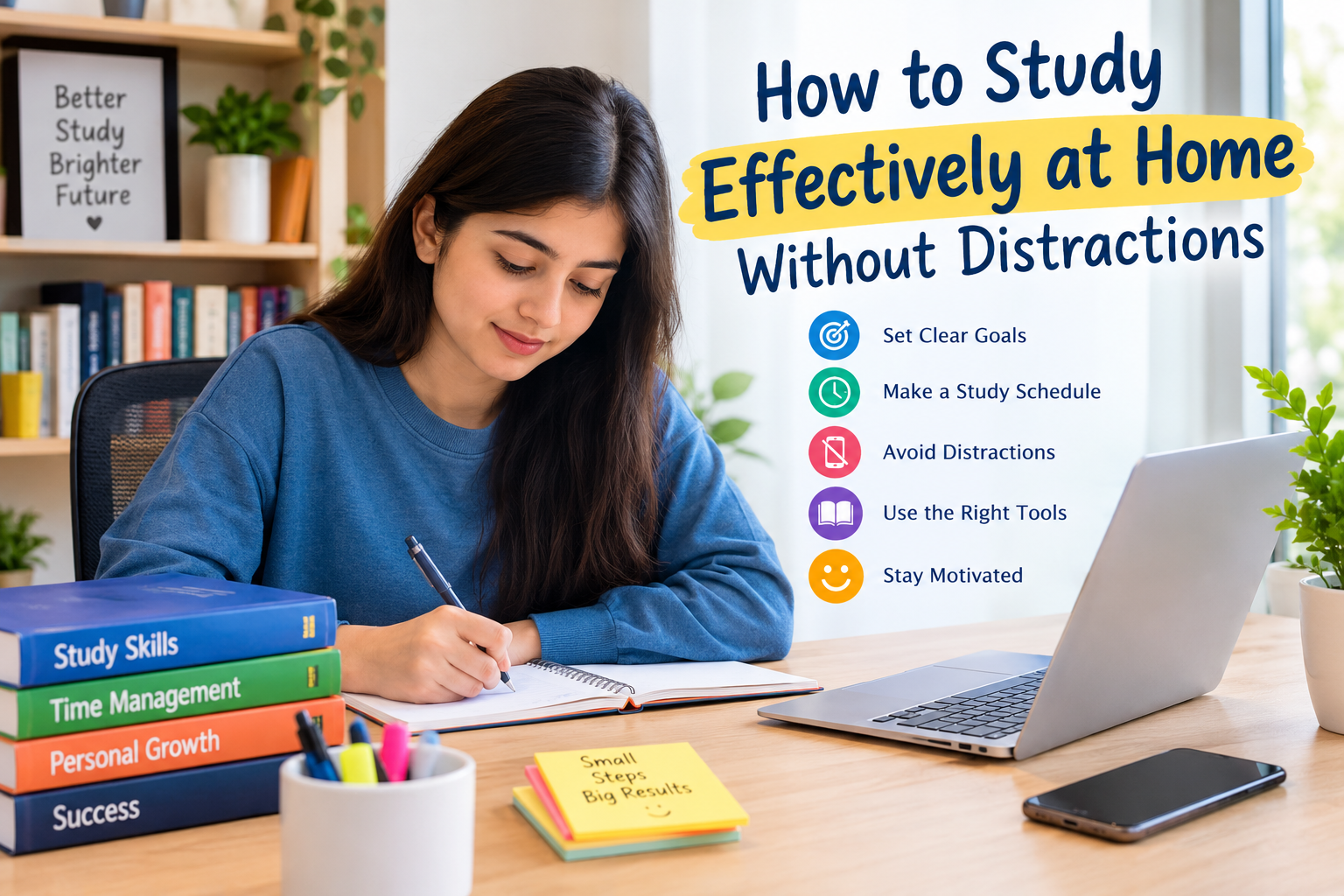
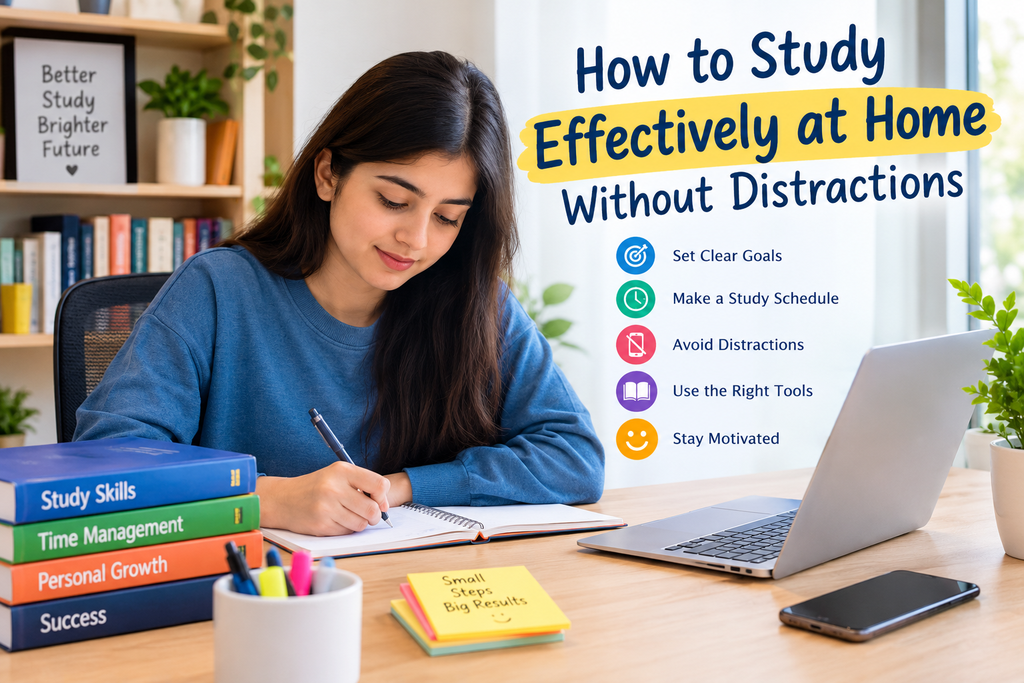
Studying at home can be comfortable, convenient, and productive, but it also comes with several challenges. Unlike a classroom or library, home is full of things that can easily distract students. Mobile phones, social media, television, household activities, and unexpected interruptions can make it difficult to concentrate on lessons. Even when students sit at their desks for several hours, they may not achieve the results they expect.
In my opinion, effective studying is not about spending the entire day with books. It is about using time wisely, understanding what you are learning, and creating an environment that supports concentration. Students who develop good study habits can often learn more in a shorter period than those who study without a clear plan.
Learning how to study effectively at home without distractions is especially important for school students, college students, university learners, and people preparing for examinations. With the right routine, a comfortable study space, and a few practical techniques, anyone can improve their concentration and make studying less stressful.
In this article, I will explain some simple and useful ways to study at home, avoid common distractions, manage time, and develop better learning habits.
1. Create a Dedicated Study Space
One of the first things I recommend is creating a specific place for studying. You do not need a large room or an expensive desk. A small, clean corner with a chair, a table, and enough light can be suitable.
When you use the same place for studying regularly, your mind can gradually associate that space with learning. This makes it easier to begin your work and settle into a focused routine.
Try to keep your study area organized. Place your textbooks, notebooks, pens, and other necessary materials within reach. Remove unnecessary objects that might attract your attention.
Good lighting is also important because poor lighting can make reading uncomfortable. Choose a quiet location whenever possible, and make sure your chair and desk allow you to sit comfortably.
If you share a room with family members or siblings, explain your study hours to them. A little understanding from the people around you can make a significant difference.
2. Make a Daily Study Schedule
A daily study schedule helps you understand what you need to complete and when you should complete it. Without a plan, students sometimes spend too much time on one subject and leave other important tasks unfinished.
I believe a realistic schedule is more useful than an extremely strict timetable. Start by listing your subjects, assignments, revision tasks, and upcoming examinations. Then divide them into manageable study sessions.
For example, you might spend the first session reviewing mathematics, the second reading science, and the third practicing English writing. Include short breaks between sessions so you can maintain your energy.
Your schedule should also include meals, exercise, rest, and enough sleep. Studying continuously without taking care of your basic needs can make concentration more difficult.
Try to follow your schedule consistently, but do not become discouraged if something unexpected happens. Adjust your plan when necessary and return to your priorities as soon as possible.
3. Keep Your Mobile Phone Away
Mobile phones are among the most common causes of distraction during study time. A single notification can lead to checking a message, opening a social media application, and spending much longer online than intended.
One effective way to study without distractions is to place your phone outside your study area. If you need it for educational purposes, activate focus mode or turn off unnecessary notifications.
You can also set specific times to check messages. For example, you might check your phone during a scheduled break rather than every few minutes.
If you study using a smartphone, keep only the necessary learning application open. Avoid switching between educational material and entertainment.
The goal is not to stop using technology completely. It is to control when and how you use it. When your attention is protected, you can understand lessons more easily and complete tasks with fewer interruptions.
4. Set Clear and Achievable Study Goals
Before opening a textbook, decide exactly what you want to accomplish. A general goal such as studying science for two hours may not give you enough direction.
Instead, choose a specific target, such as understanding one chapter, solving fifteen mathematics questions, or reviewing twenty vocabulary words.
Clear goals help you measure your progress and make your study sessions more meaningful. They also reduce the temptation to waste time deciding what to do next.
I recommend dividing large assignments into smaller tasks. If you need to prepare for an examination covering several chapters, focus on one section at a time.
After completing each task, review your progress. This gives you a clear picture of what you have achieved and what still needs attention.
Remember that goals should challenge you without becoming unrealistic. Completing a few important tasks properly is often more valuable than creating a long list that you cannot finish.
5. Use the Pomodoro Technique
The Pomodoro Technique is a simple time management method that divides work into focused sessions followed by short breaks. It can be useful for students who struggle to concentrate for long periods.
A common approach is to study for 25 minutes and then take a five minute break. After completing four sessions, you can take a longer break.
During each study session, focus on one task. Avoid checking messages, watching videos, or moving between unrelated activities.
During breaks, stand up, stretch, drink water, or walk around for a few minutes. These small activities can help you return to your work feeling refreshed.
However, the same timing does not work for everyone. Some students concentrate better for 40 or 50 minutes before taking a break. Experiment with different session lengths and choose the approach that suits your attention span.
The main purpose is to create a balance between focused work and regular rest.
6. Remove Noise and Other Distractions
A peaceful environment can make studying at home much easier. Loud television programs, conversations, music, and household activities can interrupt your concentration.
Whenever possible, choose a time when your home is relatively quiet. Early morning or another peaceful period may work well, depending on your family routine.
If background noise is unavoidable, consider using comfortable earplugs or listening to gentle instrumental sounds at a low volume. Avoid music with distracting lyrics if you notice that it takes your attention away from reading.
Keep your desk free from unrelated materials. Even small distractions, such as toys, unnecessary gadgets, or unrelated books, can interrupt your train of thought.
You cannot always control everything happening around you, but you can reduce many distractions by planning ahead and making small changes to your environment.
7. Study Actively Instead of Just Reading
Reading the same paragraph repeatedly does not always lead to better understanding. Effective studying requires you to engage with the information rather than simply look at it.
One useful method is active recall. After reading a section, close your book and try to explain the main ideas in your own words. Then reopen the book and check whether you missed anything important.
Another useful technique is to write short summaries. Focus on the key points instead of copying entire paragraphs from your textbook.
You can also create flashcards, answer practice questions, draw diagrams, and teach a concept to someone else. Explaining a difficult topic in simple language can reveal which parts you understand and which parts require more attention.
For subjects such as mathematics, practice solving problems instead of only reading worked examples. For languages, write sentences and practice vocabulary.
These techniques make study time more productive because they encourage understanding, memory, and practical application.
8. Take Care of Your Physical Health
Your physical condition can affect how well you concentrate. If you are tired, hungry, dehydrated, or uncomfortable, it may be harder to remain focused.
Try to get sufficient sleep according to your age and needs. Students who regularly sacrifice sleep to study late at night may find it more difficult to pay attention and remember information the next day.
Drink water throughout the day and eat balanced meals that provide energy. Include nutritious foods such as fruits, vegetables, whole grains, eggs, beans, nuts, or other suitable protein sources.
Regular physical activity can also support general well being. Even a short walk or a few minutes of stretching between study sessions can help you feel less restless.
Avoid treating sleep, meals, and breaks as wasted time. They are important parts of a sustainable study routine.
9. Communicate Your Study Hours to Your Family
Studying at home can become difficult when family members do not know that you need uninterrupted time. They may ask questions, request help with household tasks, or start conversations while you are concentrating.
A simple solution is to communicate your schedule politely. Explain when you need quiet time and when you will be available to help with other responsibilities.
For example, you could say that you plan to study from 4 PM to 5 PM and will be free afterward. A predictable schedule makes it easier for everyone to understand your routine.
If you have family responsibilities, plan your study sessions around them. You may find that two focused sessions at different times work better than one long session.
Do not expect your home to become completely silent all the time. Instead, focus on finding practical arrangements that allow you to study regularly.
10. Avoid Multitasking While Studying
Many students believe they can listen to a lecture, reply to messages, browse social media, and complete homework at the same time. In reality, switching between unrelated tasks often interrupts concentration.
When you move from one activity to another, you may need time to remember what you were doing. Repeated switching can make assignments take longer and increase the likelihood of mistakes.
I recommend giving your full attention to one important task at a time. If you are reading a chapter, finish a suitable section before moving to another activity.
Keep a notebook nearby to record unrelated thoughts or tasks that come to mind. You can return to those items later instead of interrupting your current session.
Single tasking may seem slower at first, but it can help you work more carefully and use your available time more efficiently.
11. Review Your Lessons Regularly
Regular revision is an important part of effective studying. If you learn something once and never review it, you may gradually forget important details.
Instead of waiting until examination week, review your notes regularly. You might revisit a topic later the same day, review it again after a few days, and test yourself the following week.
This approach, known as spaced repetition, spreads revision over time rather than placing all the work into one long session.
Practice questions can help you identify weak areas. If you answer a question incorrectly, examine the reason and review the relevant concept before trying again.
Keep a record of difficult topics so you know where to focus your efforts. This prevents you from spending all your time reviewing material you already understand.
Consistent revision can make examination preparation more manageable and reduce last minute stress.
12. Reward Yourself for Making Progress
Staying motivated becomes easier when you recognize your efforts. Studying should not feel like an endless task without any opportunity to relax.
After completing a meaningful goal, reward yourself with something simple. You might enjoy a snack, listen to music, spend a few minutes with family, or take a short walk.
You can also track your progress using a checklist or study planner. Marking completed tasks provides a visible reminder of what you have achieved.
Avoid using rewards that regularly become long distractions. For example, if checking social media usually turns into an hour of scrolling, choose a different activity during your break.
The purpose of a reward is to help you maintain a balanced routine, not to interrupt your progress.
13. Manage Your Study Time Before Examinations
Examination preparation becomes easier when you begin early. Leaving every chapter until the final days can create unnecessary pressure and make it difficult to understand challenging topics.
Start by identifying your examination dates and listing the subjects you need to prepare. Give more attention to difficult topics while continuing to revise the subjects you already know.
Use practice papers and sample questions when available. They can help you understand question formats, identify knowledge gaps, and practice managing time.
Do not spend every study session highlighting notes or rewriting entire chapters. Test your understanding by answering questions without looking at your textbook.
During the final days, focus on reviewing key concepts, correcting mistakes, and maintaining healthy sleep habits. A clear plan is generally more helpful than studying in a panic.
Conclusion
Learning how to study effectively at home without distractions is a skill that develops through consistent practice. You do not need a perfect room, expensive equipment, or an extremely strict timetable to become a better student.
Start with a dedicated study space, a realistic daily schedule, and clear learning goals. Keep your phone away when possible, take regular breaks, and use active learning techniques to understand your lessons. Make time for sleep, healthy meals, exercise, and regular revision.
In my view, the most important step is to begin with small changes and follow them consistently. You might start with one focused 25 minute session each day and gradually improve your routine as your concentration develops.
There will still be days when studying feels difficult. That is normal. Rather than giving up after one unproductive session, identify what distracted you and make a practical adjustment.
With patience, planning, and good study habits, you can create a more productive learning environment at home, improve your understanding, and prepare for examinations with greater confidence. The aim is not simply to study for more hours, but to make every study session count.