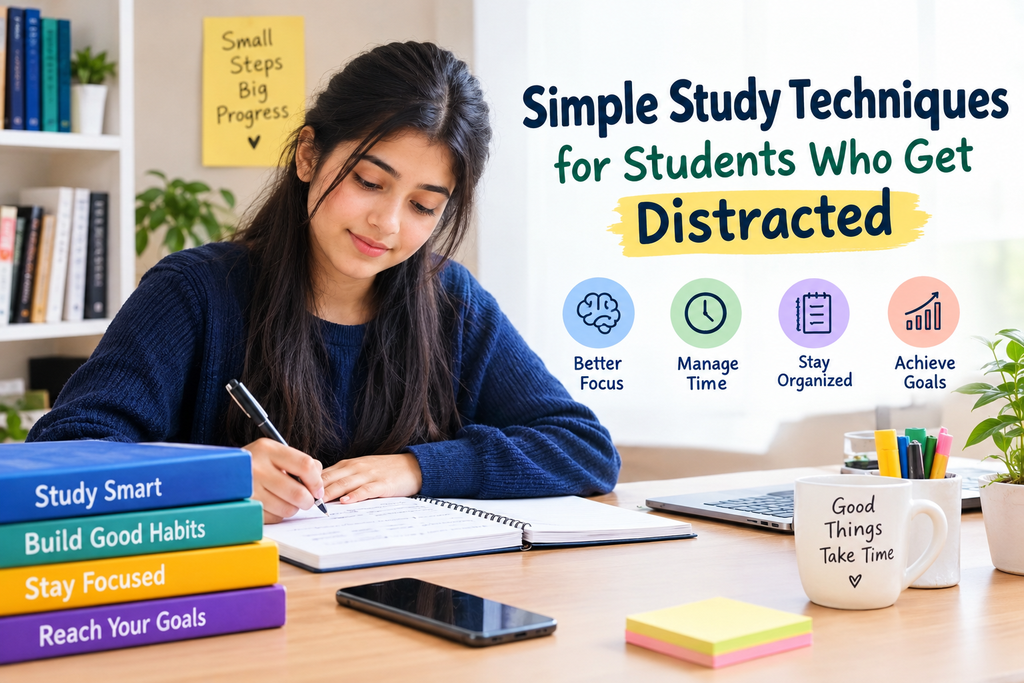
Studying effectively can be challenging when your attention keeps moving from one thing to another. Many students sit at their desks with the intention of studying, but after a few minutes, they start checking their phones, thinking about other activities, browsing the internet, or worrying about unfinished tasks. Before they realize it, an hour has passed, and very little work has been completed.
In my opinion, the biggest challenge is not always the difficulty of a subject. Sometimes, the real problem is learning how to manage attention and create a study routine that works in everyday life. Students do not necessarily need to study for long hours to achieve better results. They need simple study techniques that help them stay focused, understand information, and remember what they learn.
The good news is that improving concentration does not require expensive tools or complicated schedules. Small changes in your study environment, daily routine, and learning methods can make studying easier and more productive.
In this article, I will explain some simple study techniques for students who get distracted, including practical methods for managing time, reducing interruptions, improving memory, and developing better study habits.
1. Set Small and Clear Study Goals
One of the easiest ways to become distracted while studying is to begin without knowing exactly what you want to accomplish. For example, telling yourself that you will study mathematics for three hours does not provide a clear starting point. The task may feel too large, making it easier to delay your work.
I believe students should divide large tasks into smaller and more manageable goals. Instead of planning to study an entire chapter, decide to understand two important concepts, solve five questions, or summarize three pages of notes.
Clear goals give your mind a specific direction. They also help you recognize progress, which can make studying feel more rewarding.
Before starting a session, write down two or three tasks you want to complete. Choose the most important one first, and begin working on it without worrying about everything else.
For example, your goals might include reviewing ten vocabulary words, answering five science questions, and reading one section of a textbook. These tasks are easier to approach than a general instruction to study everything.
2. Use the Pomodoro Technique
The Pomodoro Technique is a popular time management method that divides studying into focused sessions followed by short breaks. It can be especially helpful for students who struggle to maintain concentration for long periods.
A simple version of this method works like this:
- Choose one study task.
- Set a timer for 25 minutes.
- Focus on that task until the timer ends.
- Take a five minute break.
- Repeat the process as needed.
After completing several sessions, you can take a longer break depending on your workload and energy level.
The main benefit is that you do not have to think about studying for the entire afternoon. You only need to concentrate on the current session.
If 25 minutes feels too long, start with 10 or 15 minutes. As your concentration improves, gradually increase the length of your sessions.
Remember that the purpose is not to follow a timer perfectly. The purpose is to create a manageable period during which you give your attention to one task.
3. Keep Your Phone Away While Studying
Mobile phones are among the most common sources of distraction for students. Notifications, social media, messages, games, and videos can interrupt concentration even when you intend to check them for only a few seconds.
In my view, one of the most practical study habits is to make distractions harder to access before beginning your work.
Put your phone in another room, place it inside a bag, or leave it somewhere you cannot easily reach from your desk. If you need your phone for educational purposes, activate Do Not Disturb mode and close unrelated applications.
You can also disable notifications from social media and messaging applications during your planned study sessions.
The important point is to avoid relying entirely on willpower. When your phone is directly in front of you, resisting the temptation to check it may require repeated effort. Moving it away reduces that temptation.
If you need a laptop for research, close unnecessary browser tabs and avoid opening entertainment websites during study time.
These small changes can help you spend more time learning and less time returning to a task after interruptions.
4. Create a Comfortable Study Environment
Your surroundings can influence how easily you concentrate. A noisy room, an untidy desk, poor lighting, or constant movement around you may make studying more difficult.
You do not need a perfect study room to learn effectively. A small, organized space can be enough.
Choose a place where you can sit comfortably and work with minimal interruptions. Keep your books, notebooks, pens, and other necessary materials within reach. Remove unrelated objects that may attract your attention.
Good lighting is also important because it helps you read comfortably. Choose a chair and desk arrangement that supports a comfortable posture, and keep drinking water nearby.
If your home is noisy, consider studying during quieter hours or using simple earplugs when appropriate. Students who share rooms with family members can also explain their study schedule and request a short period with fewer interruptions.
The goal is to create a space that signals to your mind that it is time to work.
You can make the process even easier by preparing your desk a few minutes before starting. When everything is ready, you can begin studying without wasting time searching for materials.
5. Study One Subject at a Time
Trying to complete several different tasks at once may seem productive, but it often makes concentration more difficult. A student might read a textbook, reply to messages, listen to a video, and think about an upcoming assignment at the same time. As a result, none of these activities receives full attention.
I recommend focusing on one subject or task at a time. If you are studying English, concentrate on reading, vocabulary, or writing instead of switching between unrelated activities every few minutes.
When you finish one task, take a moment to decide what you will do next. Then move to the next activity.
This approach reduces unnecessary mental switching and helps you understand difficult concepts more clearly. It is especially useful when preparing for examinations because many subjects require careful reading and problem solving.
6. Use Active Recall to Improve Memory
Reading the same paragraph repeatedly does not always mean that you understand or remember it. Sometimes, information looks familiar while you are reading, but you struggle to explain it when your book is closed.
Active recall is a study technique that involves retrieving information from memory without immediately looking at your notes.
Here is how you can use it:
- Read a short section of your textbook.
- Close the book.
- Explain the main idea in your own words.
- Write down everything important you remember.
- Open the book and check for missing information.
You can also turn textbook headings into questions and answer them without looking at the answers.
For example, instead of reading a section about photosynthesis repeatedly, ask yourself what photosynthesis means, why plants need it, and what happens during the process.
I find this method particularly useful because it encourages students to participate actively in learning rather than simply looking at information. It also helps identify topics that require additional revision.
7. Take Short and Refreshing Breaks
Studying continuously for several hours can leave you feeling tired and less attentive. When your mind becomes exhausted, even a simple question may seem difficult.
Short breaks give you an opportunity to relax and return to your work with renewed attention.
During a break, stand up, stretch, drink water, walk around your room, or look away from your screen. Choose activities that help you feel refreshed without consuming too much time.
Try to avoid opening social media if you know that you often spend longer than intended browsing posts or watching videos. A five minute break can easily become thirty minutes when you begin scrolling without a clear stopping point.
Your ideal break length may depend on the task, your energy, and your personal concentration level. Some students benefit from shorter study sessions, while others prefer longer periods of focused work.
The most important thing is to return to studying when your planned break ends.
8. Write Simple and Useful Study Notes
Writing notes can help you organize information, but copying every sentence from a textbook is not always an effective use of study time.
Instead, focus on the main ideas, important definitions, examples, formulas, and questions you need to remember.
Use short explanations in your own words. Headings and bullet points can make complicated topics easier to review. Diagrams and simple tables may also help when learning processes or comparing concepts.
For example, when studying a history chapter, you might record important dates, major events, their causes, and their effects rather than copying several pages of text.
Keep your notes clear enough that you can understand them during revision without reading the entire textbook again.
Avoid spending too much time decorating your notes or choosing colors. Neat notes are helpful, but understanding the subject should remain your main priority.
9. Make a Daily Study Schedule
A daily study schedule helps you decide when to study, what to study, and how much time to give each subject. Without a plan, students may spend too much time on easy activities while postponing difficult assignments.
Start by listing your subjects, homework, examination dates, and other responsibilities. Then assign realistic study periods throughout the day.
For example, you might review mathematics after school, complete an English assignment in the evening, and revise science before dinner. Adjust these activities according to your school timetable and personal responsibilities.
Include time for meals, rest, exercise, and sleep. A useful schedule should support your life rather than make every hour feel stressful.
It is also helpful to review your schedule at the end of the day. If you could not complete a task, move it to another suitable period instead of giving up on the entire plan.
Consistency matters more than creating a perfect timetable that you cannot follow.
10. Reward Yourself for Making Progress
Studying becomes easier to maintain when you recognize your effort and progress. Small rewards can help you build a positive relationship with learning.
For example, after completing a difficult assignment, you might enjoy a favorite snack, listen to music, spend time with family, or take a relaxing walk.
Make sure your reward does not interfere with your next study session. If watching videos usually makes you lose track of time, choose a different activity with a clear ending.
You can also track your daily progress using a notebook or calendar. Mark each completed study session and notice how your consistency improves over time.
Do not compare your progress with that of other students. Everyone has different responsibilities, learning speeds, and concentration levels. Focus on improving your own habits.
11. Get Enough Sleep and Look After Your Health
Good study habits are not limited to textbooks and time management. Your physical well being also influences your ability to concentrate.
Insufficient sleep can make it harder to pay attention, remember information, and manage everyday responsibilities. Students who stay awake all night studying may feel that they are gaining extra study hours, but tiredness can reduce the quality of their learning.
Try to maintain a consistent sleep schedule and get enough sleep for your age. Eat regular, balanced meals, drink enough water, and include some physical activity in your daily routine.
If you feel mentally tired, take a short break rather than forcing yourself to continue without understanding anything.
If concentration difficulties are persistent and significantly affect your daily life, consider speaking with a qualified professional or trusted support person. There may be underlying factors that deserve attention.
12. Start Small and Stay Consistent
The biggest mistake students can make is trying to change every study habit at once. They may create a strict timetable, remove every source of entertainment, and plan several hours of studying each day. When the routine becomes difficult to maintain, they may abandon it completely.
A better approach is to introduce one or two changes at a time.
Start by keeping your phone away during a 15 minute study session. Once this becomes easier, add a short break, a daily task list, or active recall.
Notice which techniques help you most and adjust your routine when necessary. Some methods may work better for mathematics, while others may be more useful for reading, memorization, or writing assignments.
Remember that getting distracted occasionally is normal. Progress does not mean that your mind will never wander. It means learning how to recognize distractions and return your attention to the task.
Conclusion
Simple study techniques for students who get distracted can make learning more manageable and productive. Setting clear goals, using focused study sessions, keeping your phone away, organizing your study space, and practicing active recall are practical ways to improve concentration.
In my opinion, students should focus on building consistent habits instead of expecting immediate results. You do not need to study perfectly every day. You need a realistic routine that helps you make progress even when motivation is low.
Start with one technique today and practice it regularly. Over time, small improvements can help you understand lessons more effectively, prepare for examinations with greater confidence, and manage your academic responsibilities more comfortably.