Introduction
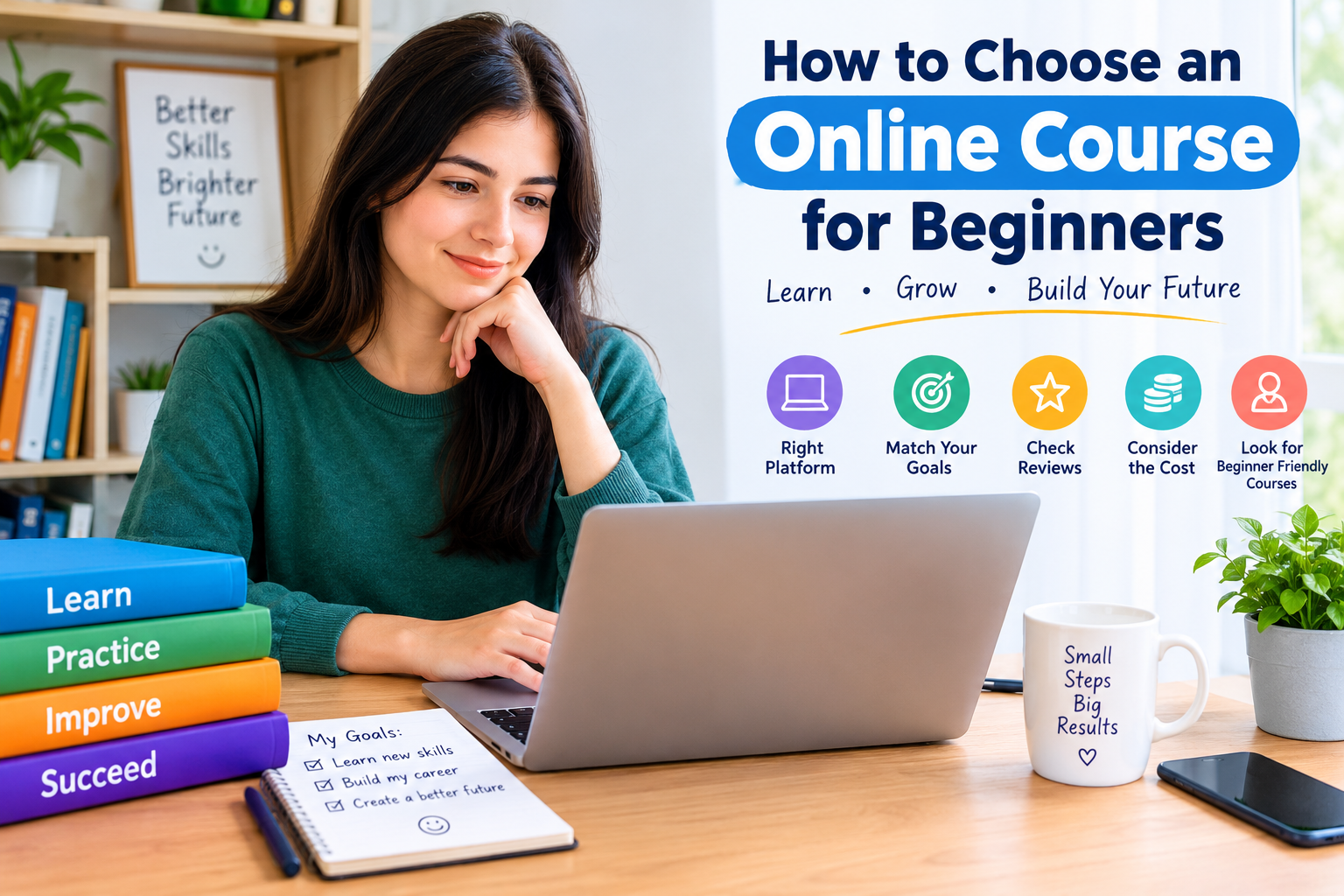
Online learning has become one of the easiest ways to gain new knowledge, improve existing skills, and explore different career opportunities. Whether someone wants to learn computer skills, digital marketing, graphic design, programming, writing, or another subject, online courses provide a flexible way to study from home. However, with so many courses available on the internet, choosing the right one can sometimes feel confusing, especially for beginners.
In my opinion, the best online course is not necessarily the most expensive or the most popular one. It is the course that matches your learning goals, current skill level, available time, and budget. A well selected course can help you build confidence, understand difficult concepts, and make steady progress without feeling overwhelmed.
If you are new to online learning, you do not need to understand everything before getting started. You simply need to identify what you want to learn and find a course that explains the subject in a clear and practical way. In this guide, I will explain how to choose an online course for beginners and what to consider before making your final decision.
1. Identify Your Learning Goals
The first step in choosing an online course is understanding why you want to learn something new. Without a clear goal, it is easy to waste time exploring different subjects without making meaningful progress.
For example, if you want to improve your career opportunities, you might consider learning computer skills, communication, data analysis, or digital marketing. If you want to start a personal project, a course about website development, photography, or content writing might be more suitable.
I recommend writing down one specific learning goal before searching for courses. Instead of saying that you want to learn technology, decide whether you want to understand basic computer operations, create websites, or learn programming fundamentals.
A clear goal makes it easier to compare different courses and choose the one that provides the knowledge you actually need.
2. Choose a Beginner Friendly Course
When learning a new subject, it is important to select a course designed for beginners. Some courses assume that students already understand technical terms, basic concepts, or advanced procedures. Starting with these courses can make learning unnecessarily difficult.
A beginner friendly online course usually introduces the subject from the beginning. It explains important terms, provides simple examples, and gradually moves toward more challenging topics.
Before enrolling, read the course description carefully. Look for phrases such as beginner level, no previous experience required, introductory course, or basic skills.
You should also check the course outline to understand what you will learn in each lesson.
In my view, a simple course that explains the fundamentals properly is often more valuable than an advanced course that leaves you confused. Building a strong foundation makes it easier to learn more complex skills later.
3. Research the Online Learning Platform
The platform offering the course is another important factor to consider. A reliable learning platform generally provides clear course information, organized lessons, accessible learning materials, and a straightforward way to contact support when needed.
Several established platforms offer online education for beginners. For example, Coursera provides courses and professional learning programs, edX offers educational courses from universities and other institutions, and Khan Academy provides free learning resources in various subjects.
You can also explore educational content on platforms such as Udemy, depending on the subject and course you want to study.
However, do not choose a platform simply because its name is familiar. Check whether the specific course meets your needs. A reputable platform can host courses with different teaching styles, levels, and learning outcomes.
Before signing up, review the platform’s payment terms, account requirements, course access period, and available learning features.
4. Check the Instructor’s Experience
The instructor plays an important role in your online learning experience. Even a useful subject can become difficult to understand if the lessons are poorly explained.
Before choosing an online course, find out who teaches it. Look at the instructor’s professional background, relevant experience, teaching history, and knowledge of the subject.
You do not always need a famous instructor. What matters most is whether the person can explain concepts clearly and help beginners understand them.
If preview lessons are available, watch one or two before enrolling. Pay attention to the instructor’s speaking style, explanation quality, lesson structure, and use of examples.
A good instructor makes complicated topics easier to understand and encourages students to apply what they learn.
5. Read Student Reviews and Ratings
Student reviews can help you understand what to expect from an online course. They may reveal whether the lessons are useful, the explanations are clear, and the course matches its advertised description.
When reading reviews, look beyond the overall rating. A high rating does not automatically mean a course is the right choice for every beginner.
Look for detailed feedback from students who had similar goals or experience levels. Their comments may explain whether the course starts with basic concepts, includes practical exercises, or requires additional knowledge.
It is also helpful to read a mixture of positive and critical reviews. Some students may prefer short videos, while others may learn better through detailed explanations.
Be cautious of reviews that seem repetitive, vague, or unrealistic. Use reviews as one part of your decision rather than relying on them completely.
6. Compare Free and Paid Online Courses
One of the most common questions beginners ask is whether they should choose a free online course or pay for a premium option.
The answer depends on your learning goals and financial situation. Free courses can be an excellent starting point because they allow you to explore a subject without making a large financial commitment.
Many free online learning resources provide useful lessons, reading materials, demonstrations, and practice activities. These can be enough to help you develop basic knowledge.
Paid courses may offer additional features, such as structured assignments, instructor feedback, projects, or certificates. However, these features vary between courses, so paying more does not guarantee better learning.
I suggest starting with free resources when you are unsure whether a subject interests you. Once you understand the basics and decide to continue, you can consider investing in a more comprehensive course.
Always review the full price, possible subscription fees, refund policy, and certificate charges before making a payment.
7. Review the Course Curriculum
The curriculum explains what the course covers and how the lessons are organized. Reviewing it before enrollment can help you avoid courses that are too basic, too advanced, or unrelated to your goals.
A useful beginner course should cover the essential concepts in a logical order. It should start with foundational knowledge and gradually introduce more detailed topics.
For example, a beginner course in graphic design might introduce design principles, colors, typography, basic software tools, and simple projects. A computer skills course might begin with operating a computer, managing files, using the internet, and understanding basic office applications.
Compare the curriculum with your learning objectives. Ask yourself whether the course covers the skills you want to develop.
You should also check whether the lessons include practical examples or exercises. A clear curriculum helps you understand what you are paying for and what you can reasonably expect to learn.
8. Consider the Course Length and Your Schedule
Online courses offer flexibility, but you still need enough time to study consistently. Before choosing a course, consider how much time you can realistically dedicate to learning each week.
Some courses contain short lessons that can be completed in a few minutes. Others require several hours of study, assignments, and project work.
If you have school, work, or family responsibilities, a course with flexible access may be more convenient than one with strict deadlines.
Do not select a course simply because it promises to teach everything in a very short time. Learning a useful skill requires practice, repetition, and patience.
I recommend creating a simple study schedule. Even 20 to 30 minutes of focused learning each day can help you develop a regular habit.
Choose a course that fits your routine so that learning becomes a manageable part of your day rather than another source of stress.
9. Look for Practical Exercises and Projects
Watching lessons is helpful, but practical application is what allows you to test your understanding.
When choosing an online course for beginners, look for quizzes, assignments, exercises, demonstrations, or projects. These activities help you identify what you understand and where you need more practice.
For instance, someone learning web development should ideally create a simple webpage. A beginner studying content writing can practice writing short articles. Someone learning spreadsheets can work with sample data and create basic calculations.
Practical activities also help you build confidence because you can see the results of your effort.
Before enrolling, check whether the course includes hands on practice or only recorded lectures. If practical activities are limited, you can still create your own projects alongside the lessons.
The important thing is to apply your knowledge instead of only watching videos.
10. Check Certificates and Career Benefits
Some online courses offer certificates after students complete the required lessons or assessments. These certificates can provide evidence that you studied a particular subject, but their value depends on the course, issuing organization, and requirements of the employer or institution.
Before paying for a certificate, consider why you need it. If your goal is personal development, the knowledge and skills you gain may be more important than a formal document.
If you want to improve your employment opportunities, research the qualifications employers in your chosen field actually recognize. Some careers require accredited qualifications or specific professional certifications that a general online course cannot replace.
You should also check whether the certificate is included in the course price or requires an additional payment.
Avoid enrolling in a course only because it promises guaranteed employment or unrealistic career results. A useful course can support your development, but success also depends on practice, experience, and how effectively you apply your skills.
11. Check Device Requirements and Course Accessibility
Before enrolling, make sure you have the equipment and internet access needed to complete the course.
Some courses work well on smartphones, while others require a computer and specific software. For example, basic communication or language lessons may be easy to follow on a phone, whereas programming, video editing, and advanced spreadsheet work may be more convenient on a computer.
Check whether the course offers downloadable materials, subtitles, transcripts, or mobile access. These features can make studying easier, especially when you have limited internet access or prefer reading alongside watching videos.
If the course requires paid software, additional equipment, or other resources, include those costs in your budget.
Choosing a course that works with your available devices can prevent unnecessary difficulties after enrollment.
12. Avoid Common Mistakes When Choosing a Course
Beginners sometimes make avoidable mistakes when selecting online courses. One common mistake is enrolling in several courses at the same time. This can divide your attention and make it difficult to finish any of them.
Another mistake is choosing a course because it is popular without checking whether it matches your needs. A course that works well for another student may not suit your experience level or learning style.
You should also avoid rushing into a purchase because of a limited time discount. Take time to read the course details and understand the payment conditions.
Finally, do not expect immediate results. Learning a new skill takes consistent effort, and progress may be gradual.
My advice is to choose one suitable course, complete its important lessons, practice regularly, and review your progress before moving to another subject.

13. Make a Final Comparison Before Enrolling
Once you have shortlisted two or three courses, compare them using the same criteria. This makes it easier to identify the option that offers the best overall value.
Consider the following points:
- Does the course match your learning goals?
- Is it designed for beginners?
- Does the instructor explain concepts clearly?
- Is the curriculum organized and relevant?
- Are student reviews helpful and credible?
- Does the course fit your budget?
- Can you complete it with your available time and equipment?
- Does it include practical exercises or useful projects?
You can write down the advantages and disadvantages of each option. The best choice is the one that meets your most important requirements, not necessarily the one with the longest curriculum or the most expensive price.
Conclusion
Choosing an online course for beginners becomes much easier when you understand your goals and compare your options carefully. The right course should match your current knowledge, explain concepts clearly, provide useful practice, and fit your budget and schedule.
In my opinion, beginners should focus on building a strong foundation instead of trying to learn everything at once. Start with a subject that interests you, research the instructor and platform, review the curriculum, and look for opportunities to practice what you learn.
Remember that enrolling in a course is only the beginning. The real benefit comes from studying consistently, completing exercises, asking questions when necessary, and applying new knowledge to real situations.
You do not need the perfect course to begin your learning journey. You need a suitable course, a realistic plan, and the willingness to keep improving. With the right approach, online learning can become a valuable way to develop skills, increase confidence, and explore new opportunities.
Frequently Asked Questions
1. How do I choose an online course as a beginner?
Start by identifying your learning goal. Then look for a beginner friendly course with a clear curriculum, an experienced instructor, helpful reviews, and practical exercises. Compare the cost and schedule before enrolling.
2. Are free online courses good for beginners?
Yes. Many free online courses provide useful knowledge and foundational skills. They are a practical way to explore a subject before deciding whether you need a paid course or certificate.
3. What should I check before buying an online course?
Review the curriculum, instructor background, student feedback, course duration, practical activities, device requirements, total cost, and refund policy. Make sure the course matches your needs.
4. How much time should beginners spend on online learning?
The ideal amount depends on your schedule and the difficulty of the subject. Starting with 20 to 30 minutes daily can help you develop consistency. You can gradually increase your study time as your routine improves.
5. Can online courses help me develop job skills?
Yes. Online courses can help you develop skills in areas such as computer applications, communication, programming, design, and digital marketing. To improve your career prospects, combine learning with practical projects and experience.
6. Is an online course certificate worth it?
A certificate may be useful when it is relevant to your goals and recognized by employers or educational institutions. However, you should check its value before paying. Practical skills and demonstrable experience are also important.