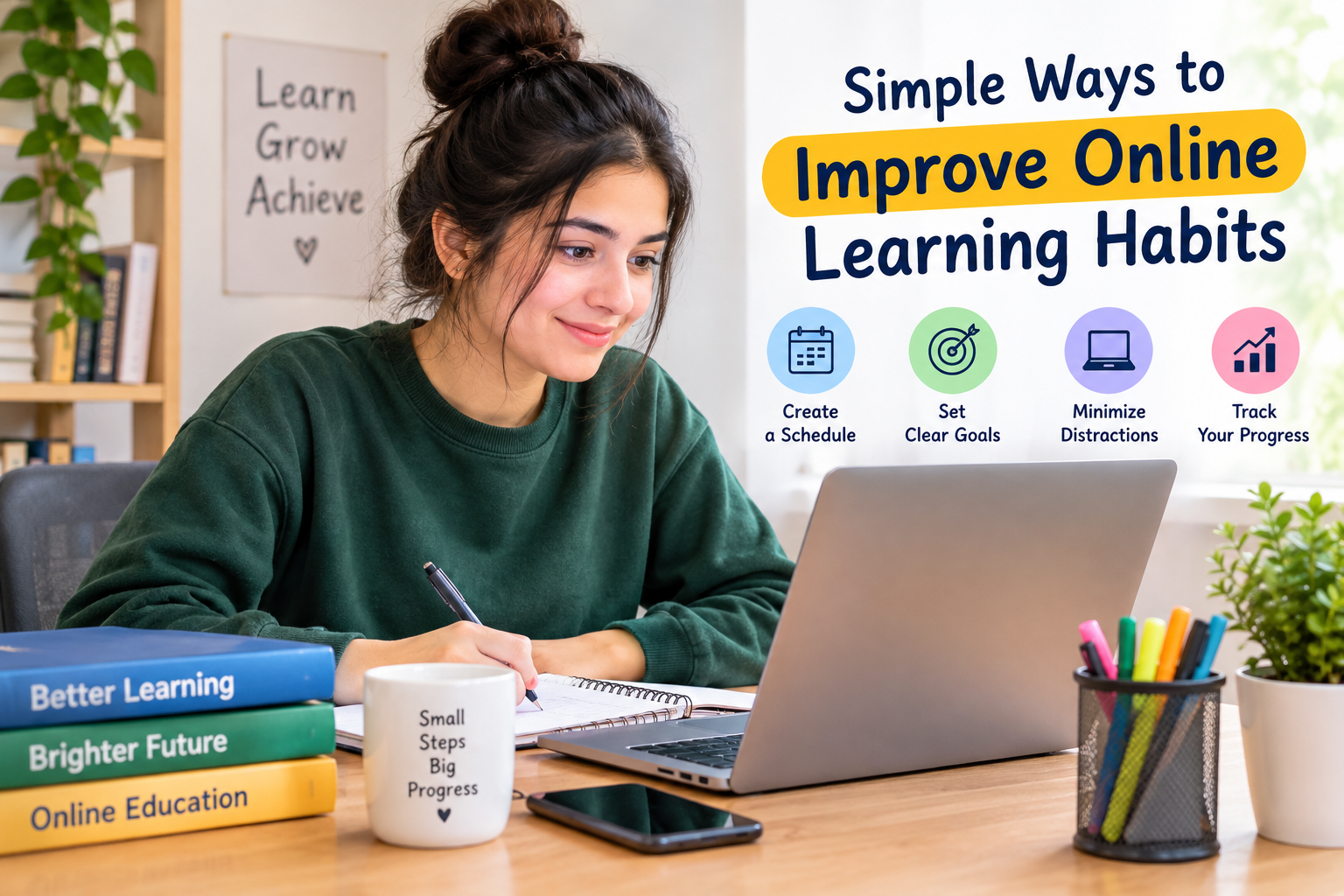
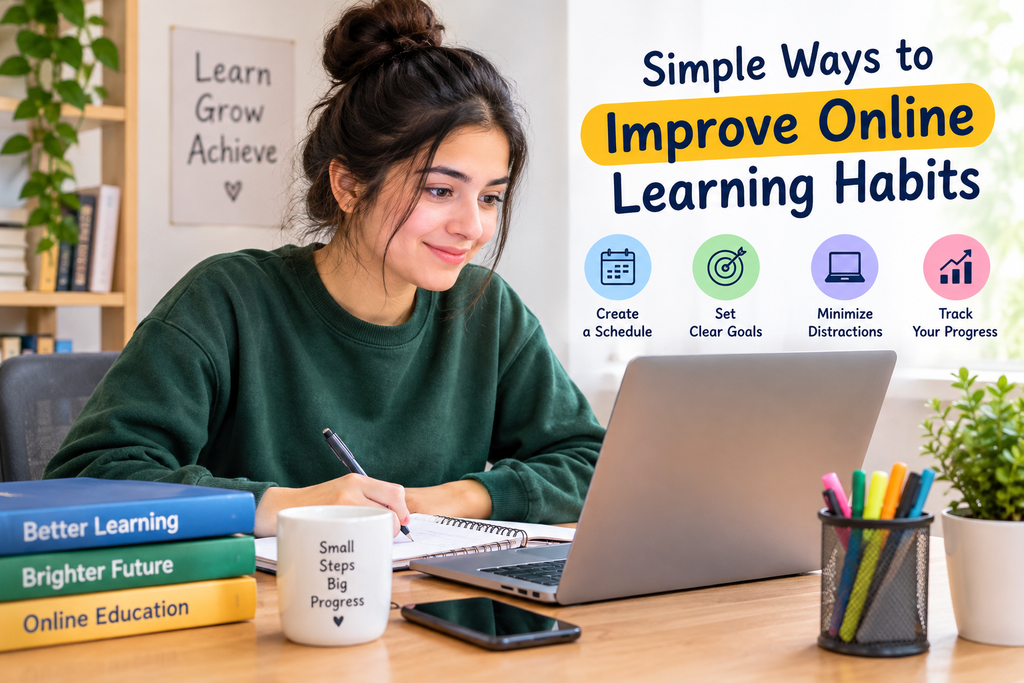
Online learning has become an important part of education for students, professionals, and anyone who wants to learn something new. From my experience, studying online can be very convenient because I can learn from home, choose my own study time, and access learning materials whenever I need them. However, online learning also requires good habits. Without a proper routine, it is easy to lose focus, delay lessons, or spend more time scrolling through unrelated content than actually studying.
The good thing is that improving online learning habits does not have to be difficult. Small changes in the way we organize our time, use technology, and approach our lessons can make a noticeable difference. In this article, I will share some simple ways that I believe can help students build better online learning habits and make their study sessions more productive.
Create a Simple Study Schedule
One of the first things I recommend for better online learning is creating a simple study schedule. When there is no fixed classroom timetable, it can be tempting to study whenever you feel like it. The problem is that this often leads to procrastination.
I find it easier to choose specific times for studying and treat those times as important appointments. For example, you can decide to study from 9 AM to 10 AM every morning or spend one hour studying in the evening.
Your schedule does not have to be complicated. A simple list of subjects and study times can be enough. The important thing is to follow it consistently.
A regular study schedule helps create a learning routine. Over time, your mind starts to recognize that a particular time is meant for learning, which can make it easier to get started.
Set Clear Learning Goals
Another useful online learning habit is setting clear goals. Instead of simply saying that you will study mathematics today, decide exactly what you want to complete.
For example, your goal could be to watch two lessons, complete ten practice questions, or understand one specific topic.
I personally believe that smaller goals are easier to manage than large and unclear goals. When a task feels too big, it can become difficult to know where to begin.
Try dividing larger topics into smaller tasks. Completing these smaller tasks can give you a sense of progress and keep you motivated.
Choose a Comfortable Study Space
Your study environment can have a major effect on your online learning experience. If you study in a noisy or uncomfortable place, staying focused can become difficult.
I prefer having a specific place where I can study without too many distractions. It could be a desk in your room, a quiet corner of your home, or another comfortable location.
Keep your laptop, notebook, headphones, and other necessary items nearby. A clean and organized study space can help you feel more prepared.
You do not need an expensive desk or professional setup. Even a simple table and chair can work well if the area is comfortable and suitable for studying.
Remove Digital Distractions
Technology is one of the biggest advantages of online learning, but it can also become one of the biggest distractions.
While studying on a laptop or phone, it is easy to check social media, watch unrelated videos, respond to messages, or browse websites. Before you realize it, a large part of your study time may be gone.
I recommend turning off unnecessary notifications during study sessions. You can also put your phone away if you do not need it for your lesson.
If you are using a browser for online classes, keep only the tabs that are related to your study. This simple habit can help you stay focused for longer.
Take Short Breaks
Studying continuously for several hours may sound productive, but it can actually make it harder to concentrate. I have found that taking short breaks helps refresh the mind.
After studying for a reasonable period, take a few minutes to stand up, walk around, drink water, or simply rest your eyes.
The purpose of a break is to refresh yourself, not to start another long activity. If you open social media during your break, it can easily become much longer than planned.
Short and controlled breaks can help you return to your lesson with better concentration.
Take Your Own Notes
Watching online lessons is useful, but simply watching videos may not always be enough. Taking notes can make online learning more active.
When I study a new topic, I try to write down important ideas in my own words. This helps me remember the information and makes it easier to review later.
Your notes do not need to contain every sentence from the lesson. Focus on important definitions, examples, formulas, key points, and questions that you do not understand.
You can use a notebook, a digital note taking application, or a simple document on your computer. Choose the method that feels easiest for you.
Practice What You Learn
One of the best ways to improve online learning is to practice the information you have studied.
For example, if you are learning a programming language, write some code. If you are studying mathematics, solve practice questions. If you are learning a new language, try writing or speaking using new vocabulary.
Practice helps turn information into actual knowledge.
From my point of view, learning becomes much more effective when I do something with the information instead of only reading or watching it.
Review Lessons Regularly
Another important habit is regular revision. It is easy to forget information if you study something once and never return to it.
Try reviewing your notes after a lesson. You can also spend some time each week revisiting older topics.
Regular review does not have to take a long time. Even fifteen or twenty minutes can be useful when done consistently.
I find that reviewing information regularly is much easier than trying to remember everything immediately before an exam.
Participate in Online Classes
If your course includes live classes, discussions, or group activities, try to participate instead of only watching quietly.
Ask questions when something is unclear. Answer questions when you know the solution. Take part in discussions and communicate with classmates when appropriate.
Participation makes online learning more interactive. It can also help you understand difficult topics from different perspectives.
If you are shy about asking questions during a live class, you can write your question down and ask your teacher later.
Use Online Learning Resources Wisely
There are countless online learning resources available today. You can find educational videos, articles, tutorials, courses, practice websites, ebooks, and many other materials.
However, having too many resources can sometimes create confusion.
I recommend choosing a few reliable resources and using them consistently instead of jumping between many different websites.
If one explanation does not make sense to you, then look for another explanation. The goal should be understanding the topic rather than collecting hundreds of learning resources.
Manage Your Study Time
Good time management is essential for successful online learning. Without a physical classroom reminding you about lessons, you need to take responsibility for your own schedule.
Try estimating how much time each task will require. Give yourself enough time for watching lessons, taking notes, practicing, and reviewing.
It can also help to complete difficult tasks when your energy and concentration are highest.
For example, if you concentrate better in the morning, use that time for challenging subjects. Save easier tasks for periods when your energy is lower.
Stay Consistent Instead of Trying to Be Perfect
One mistake many learners make is expecting themselves to study perfectly every day. In reality, everyone has days when they feel tired, distracted, or less motivated.
I believe consistency is more important than perfection.
If you miss one study session, do not give up on your entire routine. Simply start again the next day.
Studying for one hour regularly is often more useful than studying for five hours once and then stopping for several days.
Small efforts can become strong habits when they are repeated over time.
Protect Your Health While Studying Online
Online learning usually means spending a lot of time looking at a screen, so it is important to take care of your physical well being.
Sit in a comfortable position and try to maintain good posture. Give your eyes regular breaks from the screen. Drink enough water and avoid sitting in the same position for too long.
Physical movement can also help you feel more refreshed. A short walk or some simple stretching between study sessions can make a difference.
Good learning habits should support your overall well being rather than making you feel constantly exhausted.
Track Your Progress
Tracking your progress is another simple way to improve online learning habits.
You can keep a checklist of lessons, assignments, practice sessions, or topics you have completed.
Seeing your progress can provide motivation. It also helps you identify areas where you may need to spend more time.
For example, if you notice that you consistently avoid one particular subject, you can create a specific plan to improve it.
Reward Yourself After Completing Tasks
Learning can sometimes feel difficult, especially when you are studying a challenging subject. Small rewards can help make the process more enjoyable.
After completing an important task, you could take a short break, enjoy a cup of tea, listen to music, or do another activity you like.
The reward does not have to be large. The idea is simply to give yourself something positive after completing your learning goal.
Final Thoughts
Improving online learning habits is not about creating a complicated routine. In my opinion, the most effective approach is to start with a few simple changes and build from there.
Create a realistic study schedule, set clear goals, choose a comfortable study space, reduce digital distractions, take useful notes, practice what you learn, and review your lessons regularly. Most importantly, try to stay consistent.
Online learning gives us the freedom to learn at our own pace, but that freedom also comes with responsibility. When we develop better study habits, we can use that freedom more effectively.
You do not need to change everything at once. Start with one or two habits today and gradually add more as you become comfortable. With patience and regular effort, better online learning habits can make studying more organized, focused, and enjoyable.