Introduction
Learning new skills has become easier than ever because the internet provides access to thousands of educational resources. In the past, people often needed to attend physical classes, purchase expensive books, or pay for private tutors to learn something new. Today, beginners can study a wide range of subjects from home with the help of free online learning resources.
In my opinion, online learning is one of the most practical ways to improve knowledge, develop useful skills, and prepare for better opportunities. Whether someone wants to learn computer skills, improve English, understand mathematics, explore digital marketing, or start programming, there are many websites that can help them get started without spending money.
However, choosing the right learning platform can sometimes be confusing. Some websites focus on academic subjects, while others provide professional training, video lessons, interactive exercises, or practical projects. Beginners should understand what each platform offers before deciding where to start.
In this article, I will explain some of the best free online learning resources for beginners, their main benefits, and how to use them effectively.
1. Khan Academy for Basic Education
Khan Academy is one of the best free educational websites for people who want to strengthen their basic knowledge. It offers lessons in mathematics, science, economics, computing, and several other subjects.
I recommend Khan Academy to beginners who want clear explanations without feeling pressured to learn everything quickly. Its video lessons and practice exercises help students understand difficult concepts step by step.
For example, a student struggling with fractions can review basic lessons before moving to more advanced mathematics. Similarly, someone interested in science can explore topics such as biology, chemistry, and physics.
Another advantage is that learners can study at their own pace. They can repeat lessons whenever necessary and practice questions until they understand the subject.
Khan Academy is particularly useful for school students, independent learners, and adults who want to refresh their academic knowledge.
Website: https://www.khanacademy.org
2. Coursera for Professional Skills
Coursera is a popular online learning platform that provides courses from universities and professional organizations. It covers subjects such as business, technology, communication, project management, and data analysis.
For beginners, Coursera can be a useful starting point when exploring a new career or developing professional skills. Many courses include video lectures, reading materials, quizzes, and structured learning plans.
For example, someone interested in digital marketing can explore introductory courses to understand search engine optimization, online advertising, and content strategy. A beginner interested in technology can look for courses about programming, data analysis, or information technology.
It is important to understand that not every Coursera course is completely free. Some courses provide free access to learning materials, while certificates, graded assignments, and other features may require payment. Availability depends on the course and its current enrollment options.
My suggestion is to check the course details before enrolling and choose a course that matches your learning goals.
Website: https://www.coursera.org
3. edX for University Level Learning
edX is another valuable resource for beginners who want to study subjects offered by universities and educational institutions. It provides courses in computer science, business, engineering, humanities, and other fields.
One reason I find this platform useful is that it allows learners to explore structured educational content from their homes. Beginners can investigate unfamiliar subjects and gradually develop a deeper understanding.
For example, someone interested in computer science can begin with introductory programming concepts. Another learner may explore business management to understand how organizations operate.
Some courses offer free access to learning materials, although certificates and certain course features may cost money. The available options vary, so beginners should review the enrollment information carefully.
edX is suitable for learners who prefer organized lessons and want to explore university style education before committing to a paid program.
Website: https://www.edx.org
4. YouTube for Free Video Lessons
YouTube is one of the easiest free online learning resources for beginners because it offers educational videos on almost every subject.
Learners can find tutorials about computer basics, English grammar, mathematics, photography, cooking, graphic design, coding, and many other skills. Most videos are easy to access, making the platform convenient for people who want to learn at home.
For example, a beginner who wants to use Microsoft Excel can search for lessons covering formulas, spreadsheets, tables, and charts. Someone interested in website development can watch tutorials explaining HTML, CSS, and JavaScript.
However, not every educational video provides accurate or complete information. Beginners should look for experienced instructors, organized playlists, clear explanations, and practical demonstrations.
I also recommend avoiding the habit of watching videos without practicing. If you are learning a new skill, pause the video and try the instructions yourself.
YouTube works best when learners follow a structured playlist instead of jumping randomly between unrelated videos.
Website: https://www.youtube.com
5. freeCodeCamp for Learning Programming
freeCodeCamp is an excellent free resource for beginners who want to learn programming and web development. It provides interactive lessons, coding challenges, and practical projects.
Beginners can explore HTML, CSS, JavaScript, Python related learning materials, and other technology topics depending on the available curriculum.
One of the biggest benefits is the opportunity to practice coding while learning. Instead of only watching someone write code, learners can work through exercises and build projects that demonstrate their understanding.
For example, a beginner might start by learning how HTML structures a webpage. After that, they can study CSS to improve the design and JavaScript to add interactive features.
Programming requires patience because errors are a normal part of the process. Rather than giving up when something does not work, learners should read error messages, review their code, and try again.
freeCodeCamp is especially helpful for students, aspiring developers, and people who want to explore technology without paying for an introductory course.
Website: https://www.freecodecamp.org
6. Udemy for Exploring Different Skills
Udemy offers a large collection of online courses covering business, technology, design, photography, personal development, and many other subjects.
Although many Udemy courses require payment, free courses are also available. Beginners can search for free options and compare course descriptions, lesson previews, and instructor information before choosing one.
For example, someone interested in graphic design can explore beginner lessons about design principles and image editing. Another learner may search for introductory courses in public speaking, Excel, or website creation.
The quality and depth of courses can vary, so it is worth checking the syllabus and learning objectives before starting.
I suggest selecting a course with a clear structure and practical exercises. A short course that teaches one useful skill may be more beneficial than a long course that covers too many subjects without sufficient practice.
Website: https://www.udemy.com
7. Google Digital Garage and Grow with Google Resources
Google has offered educational resources that help people develop digital and professional skills. Its learning programs and course availability can change over time, so beginners should check the current offerings through official Google learning websites.
Grow with Google provides learning opportunities related to career development, digital skills, business growth, and technology.
These resources can be useful for people who want to understand online marketing, improve workplace skills, or learn how digital tools support businesses.
For example, a beginner planning to start a blog may benefit from learning about online visibility, digital marketing, and website performance. A small business owner may explore resources related to reaching customers online.
Some learning materials are free, while certain professional certificates and programs may require payment.
Beginners should select resources based on their specific needs rather than assuming every program includes free certification.
Website: https://grow.google
8. Duolingo for Learning Languages
Duolingo is a popular language learning platform designed to help people practice new languages through short interactive lessons.
Beginners can use it to develop vocabulary, improve reading skills, and practice basic sentence structures. Its short lessons make it easier to fit language learning into a busy daily schedule.
For example, someone learning English can practice common words and everyday phrases. Another learner may choose Spanish, French, or another available language.
I believe consistency is particularly important when learning a language. Practicing for a few minutes every day can help learners maintain progress more effectively than studying only once a week.
However, language applications alone may not develop every communication skill. Learners should also practice listening to natural conversations, reading simple texts, writing sentences, and speaking whenever possible.
Duolingo is a useful starting point for beginners who want to develop a regular language learning habit.
Website: https://www.duolingo.com
9. MIT OpenCourseWare for Independent Learners
MIT OpenCourseWare provides access to educational materials from many Massachusetts Institute of Technology courses.
It is particularly useful for learners interested in mathematics, engineering, computer science, economics, and other academic subjects.
Depending on the course, materials may include lecture notes, assignments, reading lists, and examinations. These resources allow independent learners to explore subjects that might otherwise seem difficult to access.
However, some courses are more advanced than others. Beginners should look for introductory material and make sure they understand the necessary background concepts before progressing.
Unlike a conventional online class, educational materials may not include direct instructor support or a complete interactive learning experience.
For motivated learners who enjoy independent study, MIT OpenCourseWare can provide a valuable way to explore academic topics.
Website: https://ocw.mit.edu
10. GCFGlobal for Everyday Computer Skills
GCFGlobal offers free tutorials covering practical topics such as computer basics, internet use, email, workplace skills, and everyday digital tasks.
I consider this type of resource especially useful for people who have limited experience with computers. Not everyone begins online learning with advanced technical knowledge, and learning the basics can make other educational websites much easier to use.
For example, a beginner can study how to create documents, manage files, use email, navigate the internet, or understand common software features.
These skills can be helpful for students, job seekers, office workers, and adults who want to become more confident with technology.
GCFGlobal is a practical starting point because it focuses on everyday tasks that learners can immediately apply in real situations.
Website: https://edu.gcfglobal.org
How to Choose the Best Free Online Learning Resource
With so many educational websites available, beginners should select a platform according to their goals, experience, and preferred learning style.
First, identify the skill you want to learn. If you need help with mathematics, Khan Academy may be a suitable choice. If you want to explore programming, freeCodeCamp is worth considering. For language practice, Duolingo can help you build a foundation.
Second, consider your current knowledge. Beginners should start with introductory lessons instead of jumping into advanced topics. Learning basic concepts first makes future lessons easier to understand.
Third, review the course structure. A good learning resource should have clear explanations, organized lessons, and opportunities to practice.
Finally, check whether the content is genuinely free. Some websites provide free educational materials but charge for certificates, assessments, or additional features. Knowing these details in advance helps you avoid unexpected expenses.
Tips for Getting Better Results from Online Learning
Finding a good educational website is only the first step. Your learning habits also influence how much progress you make.
Set a realistic daily schedule. Start with 20 to 30 minutes of focused learning each day. You can increase your study time as your routine improves.
Choose one main skill. Avoid enrolling in too many courses at once. Focus on one subject until you understand its essential concepts.
Practice what you learn. If you study computer skills, complete small tasks on your computer. If you learn programming, write code. If you study a language, practice writing and speaking.
Take simple notes. Write down important ideas, unfamiliar terms, and examples. Reviewing these notes can help reinforce your understanding.
Track your progress. Set small weekly goals, such as completing three lessons or building a simple project. Achieving these goals can keep you motivated.
Review difficult topics. Do not feel discouraged if a lesson seems confusing. Repeat the explanation, find another trusted resource, and practice until the concept becomes clearer.
Most importantly, remember that learning takes time. Consistency and practical experience are more valuable than rushing through lessons simply to finish a course.
Common Mistakes Beginners Should Avoid
One common mistake is collecting courses without completing them. Saving dozens of lessons may feel productive, but real improvement comes from studying and applying what you learn.
Another mistake is expecting immediate results. Developing useful skills requires repeated practice, and some topics take longer to understand than others.
Beginners should also avoid relying on a single video or website for every subject. Different resources can explain the same concept in different ways, which may make difficult topics easier to understand.
Finally, do not assume that completing a course automatically guarantees a job or professional success. Employers and clients often value practical skills, experience, communication, and the ability to solve real problems.
Use free online learning resources as a foundation, then demonstrate your knowledge through projects, exercises, and consistent practice.
Conclusion
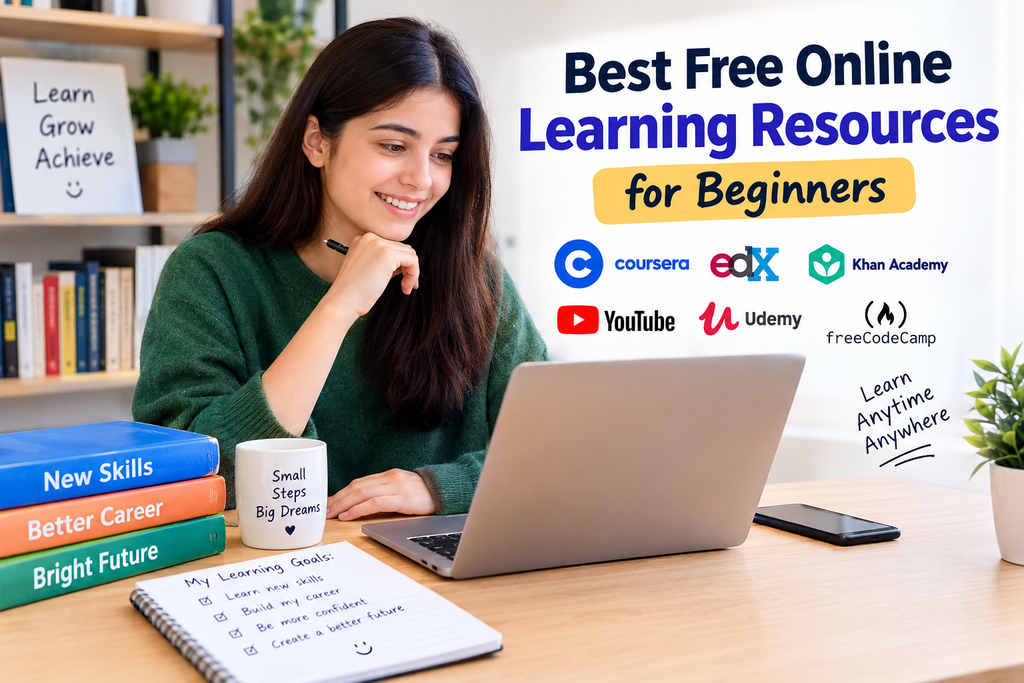
The best free online learning resources for beginners make education more accessible and flexible. Websites such as Khan Academy, Coursera, edX, YouTube, freeCodeCamp, Duolingo, and GCFGlobal offer different ways to develop academic, professional, technical, and personal skills.
In my opinion, the most effective approach is to choose one learning goal, select a suitable resource, and study consistently. You do not need expensive equipment or several paid subscriptions to begin improving your knowledge. A reliable internet connection, a clear plan, and a willingness to practice can help you make meaningful progress.
Start with a subject that interests you, complete a few beginner lessons, and apply what you learn in everyday situations. As your confidence grows, you can explore more advanced topics and build on your existing knowledge.
Free online learning resources provide an opportunity to keep learning throughout life. The important thing is not how many courses you start, but how much you understand and how effectively you use your new skills.